Skip to content
  • About
CBM - visit site homepage
Participation Toolbox
  • Home
  • Why

    Information on the importance of participation and the positive effects it has on global projects and communities.

    Why participation is important
    • Convention on the Rights of Persons with Disabilities (CRPD)
    • Additional global frameworks
    • Disability sensitive language and interaction
  • Participation in practice

    A set of guidance on how to implement participation best practice.

    Participation in practice
    • Pre-requisites for participation
    • Nothing without us
    • Participation in your project cycle
  • OPD network

    Information on how to find and work with an OPD.

    OPD network
    • Types of organisations of persons with disabilities
    • Find an OPD
    • Information for OPDs
  • Supporting material

    Supporting material for advocacy and project planning.

    Supporting material
    • Case studies
    • Participation check-lists
    • Glossary
    • Presentations
    • Keep updated
Search
  1. Home
  2. A Page
  3. Another Page
  4. A guide

A guide

Sed ut perspiciatis unde omnis iste natus error sit voluptatem accusantium doloremque laudantium, totam rem aperiam, eaque ipsa quae ab illo inventore veritatis et quasi architecto beatae vitae dicta sunt explicabo.

Why

Accessibility is a pre-condition for persons with disabilities to participate in any process. Providing accessibility covers different components. It would mean:

  1. Having the building or the venue for the consultation that adhere to accessibility standards
  2. Having public transport systems that persons with disabilities can use to reach the venue

Organisations of persons with disabilities can be engaged to support in checking the accessibility of the venue and to identify service providers for sign language and close captioning.
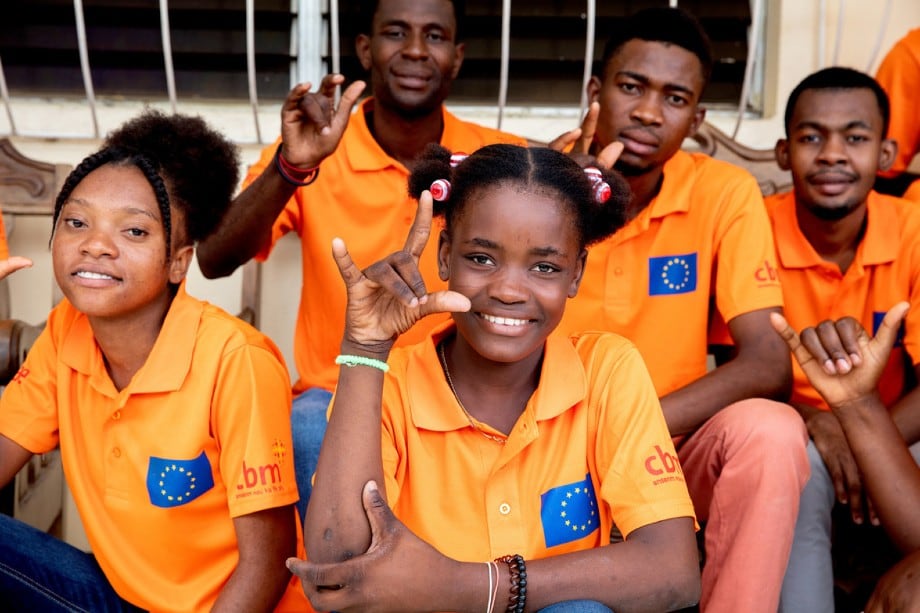
Five teenagers sit in a group looking at the camera, making positive hand gestures. They wear orange t-shirts with the CBM and EU logos.
At vero eos et accusamus et iusto odio dignissimos ducimus qui blanditiis praesentium

How

In this section we describe the accessibility for persons with disabilities

Persons with psychosocial impairments

Panel content here

Persons who are bind or low vision

Panel content here

Persons who are deaf or hard of hearing

Accessibility and reasonable accommodation requirements for persons who are blind or with low vision include:

  • Physical accessibility of the venue and the building it is housed in including having tactile way-guidance; Braille signage, good colour contrast between main surfaces, good lighting etc.
  • Venue staff that is sensitized and trained to assist persons with visual impairments.
  • Text to speech software installed in computers if they are expected to use these during the consultation.
  • Availability of accessible public transport to travel to venue.
  • In case of an online consultation the online platform and tools used must be accessible.
  • Print this guide
  • Download this guide (pdf 1.2mb)

Parent section link

  • A guide
  • Accessibility
  • Awareness raising

Supporting material

  • Face to face consultation check list
  • Presentation B

Related case studies

Case study

Lorem ipsum dolor sit amet, consectetur adipiscing elit. In iaculis ac elit ac dapibus

You may also like

  • Meet the advisory board
  • About CBM
  • How to work with an OPD
© 2022 CBM Christoffel Blind Mission
Christian Blind Mission eV
  • Glossary
  • Legal notice
  • Accessibility
  • Terms and conditions
  • Site map
  • CBM.org
  • Find CBM on Facebook
  • Find CBM on Twitter